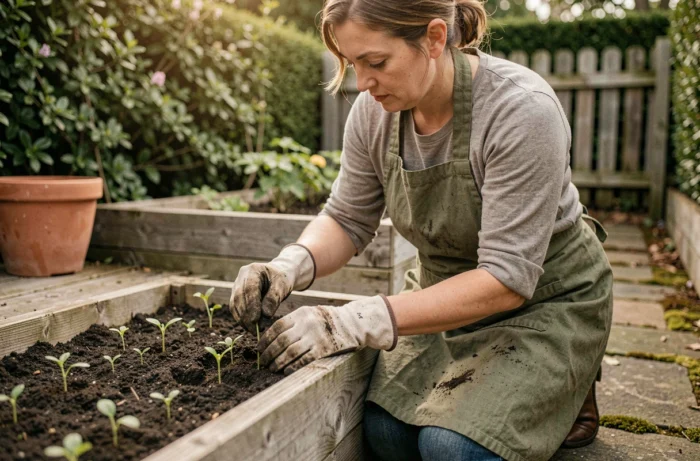
A gardening or DIY project relies on precise technical gestures, not on improvisation. Preparing the soil before sowing, choosing the right tool for the task, anticipating local regulatory constraints: each step conditions the final result. This article details the concrete mechanisms that make the difference between a successful project and a site abandoned along the way.
Living soil and natural fertility: the foundation of any vegetable garden project
Before planting anything, the soil must be understood as an ecosystem. Its texture (clay, sandy, loamy) determines its ability to retain water and nutrients. A compacted clay soil after rain hinders rooting, while overly sandy soil allows water to drain away without storing it.
Composting organic waste is the most direct lever to improve soil structure. As of January 1, 2024, the source separation of organic waste also includes garden waste: grass clippings, fallen leaves, prunings. Not every individual is required to have a personal composter; shared composting or separate collection remain alternatives depending on local arrangements.
Mature, brown, crumbly compost provides both organic matter and a microbial life that makes nutrients accessible to roots. Incorporating it on the surface for a few centimeters is sufficient. Deep digging, still common, disrupts soil layers and brings weed seeds to the surface. Favoring superficial work with a rake or a broadfork preserves this underground life.
To enrich tired soil between crops, green manures (phacelia, mustard, clover) occupy the ground, fix atmospheric nitrogen, and protect the surface from erosion. Mowed before flowering, they decompose quickly and nourish the topsoil.
Specialized resources like Jardina Brico detail these soil preparation techniques and natural fertilization to adapt each action to the nature of your land.
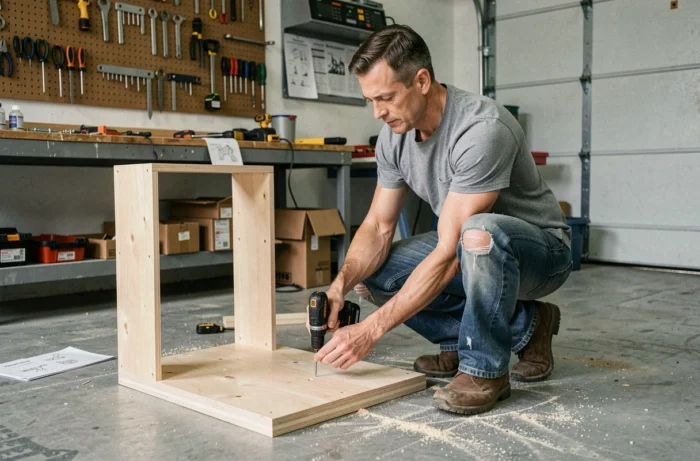
Watering the garden and local restrictions: adapting water management
Watering represents the primary water consumption in the garden, and also the main source of savings. Watering at the base of plants, in the evening or early morning, significantly reduces evaporation compared to watering in full sunlight.
Mulching plays a complementary role that is often underestimated. A layer of straw, wood chips, or fallen leaves retains soil moisture, limits the growth of weeds, and protects roots from temperature fluctuations.
Check drought orders before watering
Watering restrictions do not follow a uniform national rule. During drought periods, measures depend on prefectural orders and alert levels: they may limit watering of vegetable gardens to certain time slots or even temporarily prohibit it. The VigiEau site allows you to check the applicable rules for your address.
Rainwater harvesting fits into this adaptation logic. A collector connected to a downspout provides non-calcareous water, ideal for plants. According to an Ifop barometer for Unep conducted in March 2025, rainwater harvesting is among the changes considered or already undertaken by gardeners to adapt their practices to climate change.
DIY in the garden: choosing the right tool rather than the right product
An outdoor DIY project (building a raised bed, installing a fence, assembling a shed) rarely fails due to a lack of materials. The most common cause is inappropriate or poorly adjusted tools.
Three criteria allow for the selection of a relevant tool:
- The nature of the material to be worked: treated wood does not cut with the same blade as a plywood panel, and a concrete drill bit in softwood tears the fibers instead of drilling cleanly.
- The frequency of use: a corded tool is sufficient for occasional use, while a battery model is justified for regular outdoor interventions, far from a power outlet.
- Ergonomics and weight: a drill that is too heavy tires the wrist in less than an hour, which degrades the precision of assemblies.
A well-sharpened and well-adjusted tool often replaces a more expensive tool. Sharpening a pruning shears or hedge trimmer blade takes a few minutes with a fine-grit stone and radically changes the quality of the cut.
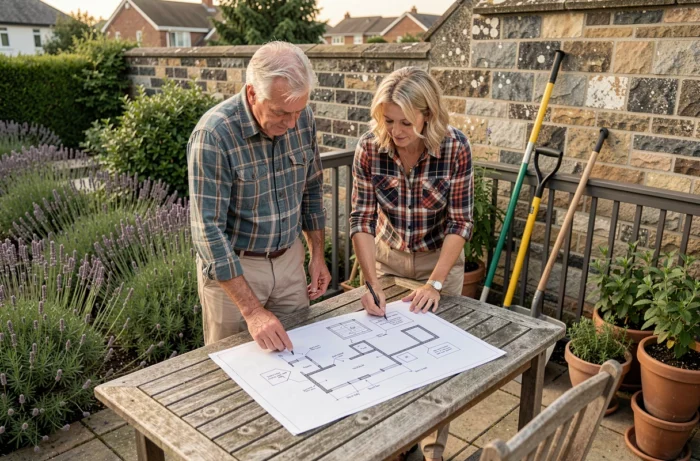
Outdoor assemblies: the screws make the difference
For any project exposed to the elements, stainless or bichromated screws resist corrosion where a standard screw rusts in a few months. This detail, often overlooked, conditions the durability of a raised bed, pergola, or trellis.
Pre-drilling prevents splitting the wood at the end of the board, especially on softwoods like pine or spruce. A pilot hole with a diameter slightly smaller than that of the screw is sufficient to prevent splintering.
Drought-resistant plants: anticipating tomorrow’s climate
The choice of plants determines the long-term viability of the garden. According to the same Ifop/Unep barometer from March 2025, the choice of drought-resistant plants is among the adaptations already underway or considered by a significant number of French gardeners.
Mediterranean plants (lavender, rosemary, santolina, gaura) tolerate prolonged dry periods once well-rooted. Their installation in the garden requires a first year of regular watering, followed by almost complete autonomy.
In the vegetable garden, some vegetables cope better with water stress than others. Tomatoes, once a deep root system is established, can space out watering. Squashes, thanks to their large leaves that shade the soil, retain moisture at their base.
Accepting a less uniform lawn, which yellows in summer and then greens up in autumn, is also part of this transition. Mowing higher (seven to eight centimeters) strengthens grass rooting and limits its water needs.
Successfully completing a gardening or DIY project relies less on the accumulation of tips than on understanding the mechanisms at play: soil life, the water cycle, the behavior of materials exposed to the elements. Checking local watering restrictions on VigiEau before installing a vegetable garden remains a reflex that is still too uncommon, yet crucial for planning crops with peace of mind.