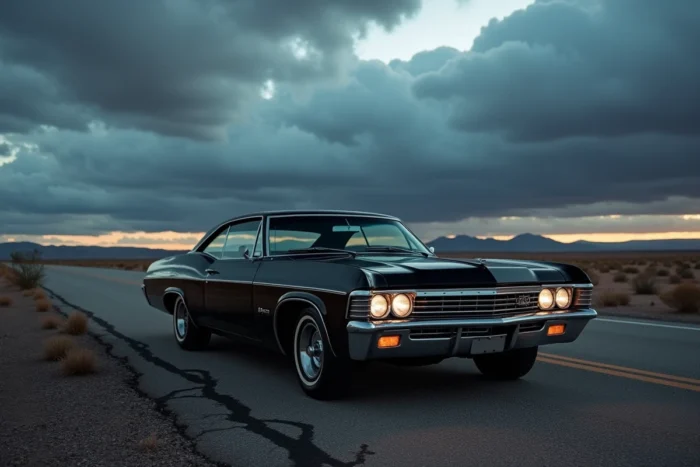
The 1967 Chevrolet Impala used in Supernatural is a black four-door hardtop, powered by a V8 engine, recognizable by its chrome grille and round taillights. Identifying an authentic Impala from this model year among the many replicas or modified versions requires a methodical verification that goes beyond mere visual appearance.
VIN Decoding of the 1967 Impala: The First Authentication Reflex
All verification starts with the vehicle identification number (VIN). On a 1967 Impala, this code is stamped on a plate riveted to the dashboard, visible through the driver’s side windshield. Each sequence of characters provides information about the exact model, body type, factory-installed engine, and assembly plant.
A common trap is finding a vehicle presented as an Impala when the VIN reveals a lower-range model (Bel Air or Biscayne) that has been modified afterward. Collectors consult decoded VIN registries and specialized guides to cross-reference the engine combination, transmission, and original color code. A comprehensive file on the Supernatural car on Auto Tech details this almost archaeological verification process applied to collectible Impalas.
If the VIN does not correspond to a two-door or four-door hardtop configuration equipped with a V8, the car does not conform to the iconic model from the series, regardless of its exterior appearance.
Matching Numbers on a Chevrolet Impala: Original Engine, Transmission, and Body
The concept of matching numbers refers to the correspondence between the serial numbers of the engine block, transmission, and body with the data recorded at the time of factory release. On a 1967 Impala, these stamps can be found on the engine block (right front side), on the transmission case, and on the manufacturer’s plate attached to the door pillar.
A matching numbers vehicle proves that its major mechanical components have not been replaced or swapped since assembly. This verification is done by cross-referencing the codes found on the car with the documented combinations for the year 1967.
- The suffix of the engine code indicates the type of V8 (small block or big block) and the original horsepower, information that is absent from the VIN alone.
- The transmission code confirms whether the transmission was manual or automatic, which must correspond to the mounted engine.
- The “trim tag” plate on the door pillar provides information about the exterior color, upholstery, and factory-ordered options.
A seller unable to provide detailed photos of these stamps or who refuses a physical inspection of the engine block is a serious warning sign.
Body and Interior Details Specific to the 1967 Model
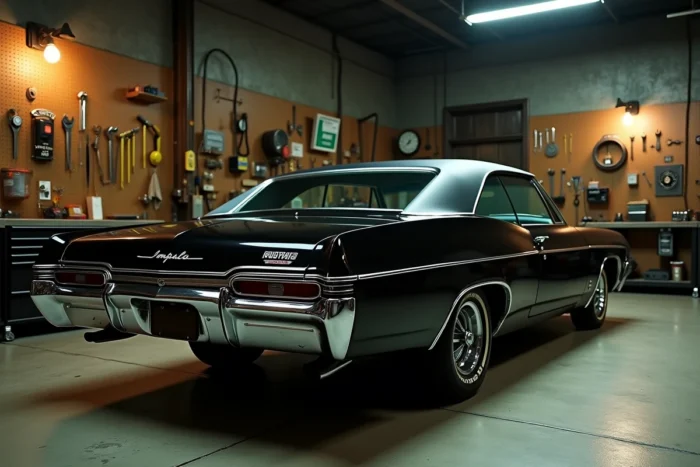
Visually, the 1967 Impala stands out from neighboring model years by several specific body elements. The grille adopts a honeycomb design framed by dual headlights, different from the 1966 model which features a grille with horizontal bars.
The taillights are a reliable marker. The 1967 Impala has three round lights on each side, whereas the SS version also has three but with a specific logo. The often-confused 1968 model switches to a completely different design with rectangular blocks.
Original Interior and Upholstery
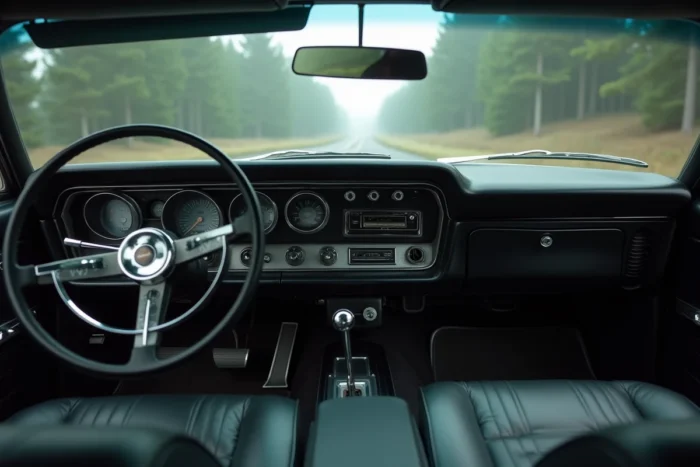
The interior of an unrestored 1967 Impala features a dashboard with round gauges integrated into a chrome panel. The original upholstery in vinyl or fabric carries patterns and textures cataloged by Chevrolet, identifiable through the trim tag code. A refurbished interior with modern materials does not disqualify the car, but it complicates the assessment of its overall authenticity.
The door trims, carpet, and dashboard plastics have precise shades associated with each exterior color code. A mismatch between the exterior color and the interior codes often betrays a repaint or a composite assembly from multiple donor vehicles.
Filming Replicas and Production Cars: Do Not Confuse
The production of Supernatural used several Impalas over the seasons, not a single example. Some were used for stunts, others for close-ups. These filming vehicles were modified (chassis reinforcements, adapted suspensions, engines different from the original) and do not correspond to a factory 1967 Impala released from Chevrolet.
In the collector market, replicas built from similar models (1966 or 1968 modified) circulate regularly. They replicate the black paint, chrome, and sometimes the fictional license plate “KAZ 2Y5” seen in the series. The license plate or the black color proves nothing about the vehicle’s authenticity.
- Check the VIN to confirm the model year and body type.
- Inspect the engine and transmission stamps to validate the matching numbers.
- Compare grille, taillight, and interior trim details with the technical documentation from 1967.
- Require a complete photographic file of the engine block and manufacturer plates before any purchase.
An Impala presented as a “Supernatural replica” has a very different market value from an authentic matching numbers 1967. The distinction relies on technical documentation, not appearance. Each plate, each stamp tells a part of the vehicle’s history, and it is this traceability that separates a collectible item from a well-made copy.