
Refilling gas in double glazing is a question that often arises when the window starts to mist between the two panes. The reflex seems logical: if the insulating gas has escaped, it just needs to be replaced. The technical reality is more nuanced, and understanding how insulating glazing works allows for making the right choice between repair and replacement.
What really happens inside a failing double glazing
Double glazing consists of two glass panes separated by a space filled with gas, most often argon. This gas is less conductive of heat than air: it slows down thermal exchanges between the inside and outside of the house.
The whole assembly is sealed at the factory with a peripheral sealing gasket. It is this gasket that keeps the gas in place and prevents moisture from entering between the panes.
When condensation appears inside the glazing, the problem is not simply a gradual decrease in gas level. Condensation indicates a failure of the gasket’s seal. Outside moisture seeps into the space between the panes, and the gas escapes through the same breach.
This is a distinction that changes everything. A tire that is slowly deflating can be reinflated. A glazing with a broken gasket cannot be simply refilled to stop the leak. Before considering refilling gas in double glazing, it is essential to first determine if the peripheral gasket is still functional, which is rarely the case when symptoms are visible.
Refilling an insulating glazing: what the standards and technique say
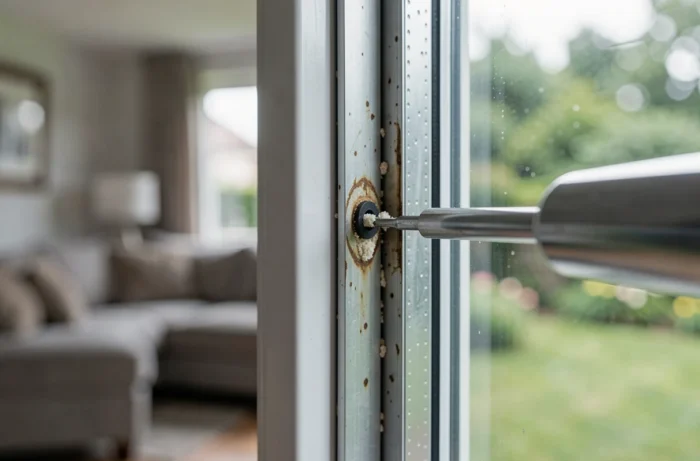
You may have read that there are processes to reinject argon into existing double glazing. The technique involves drilling a small hole in the glass or the spacer frame, sucking out the humid air, injecting fresh gas, and then sealing it back up.
On paper, it works. In practice, the limitations are serious.
A gasket problem, not a gas issue
If the sealing gasket has failed (causing the condensation), reinjecting gas without replacing the gasket is like filling a leaking container. The gas will escape again through the same defect. Refilling only makes sense if the seal is intact, which contradicts the cases where a loss of performance is observed.
Performance after intervention
A factory-made insulating glazing complies with the European standard EN 1279-3, which guarantees a high gas filling rate and a loss limited to about 1% per year. A DIY refilling cannot replicate these manufacturing conditions. The filling rate achieved is lower, and the durability of the intervention remains highly uncertain.
Professionals’ position
Most manufacturers of joinery and certification bodies consider that as soon as there is internal condensation, replacing the insulating glazing (called IGU, for insulated glass unit) is the only appropriate response. Refilling is not recognized as a lasting repair by industry standards.
Actual lifespan of argon double glazing
Why do some double glazings last for decades without issues, while others show signs of weakness after just a few years?
Well-manufactured modern glazings are designed for a technical lifespan of several decades. Observations published in the journal Glass Structures & Engineering show that low-emissivity double glazings with argon remain above about 80% of their initial filling rate after more than 20 years. The degradation of thermal performance remains very gradual in these cases.
A glazing that mists after five or ten years indicates a manufacturing or installation defect, not normal wear. The most common causes include:
- A poor-quality or poorly applied sealing gasket at the factory, which fails prematurely due to thermal cycling
- An unsuitable spacer (the frame between the two panes) that transmits too much mechanical stress to the gasket
- A defective installation, with insufficient drainage of the window frame, keeping the gasket in a permanently humid environment
In all these cases, the gas is not the cause of the problem but the consequence. Addressing the consequence without correcting the cause does not yield lasting results.
Replacement of glazing or window: when each option is justified
When the diagnosis is made (failing gasket, internal condensation), two options arise. The first: replace only the insulating glazing while keeping the existing frame. The second: replace the entire window.
Changing the glazing alone is significantly cheaper than a complete window. This is the right option when the frame (wood, PVC, or aluminum) is in good condition, the hardware functions properly, and the weatherstripping still ensures air tightness.
Complete replacement is justified when the frame is warped, the insulation of the frame is insufficient (a common case for joinery made before 2000), or when one wishes to switch to triple glazing to improve overall energy performance.
Some guidelines for making the right choice:
- If only one window is affected and the others are in good condition, replacing the glazing alone is usually sufficient
- If several windows show condensation, this may indicate a systemic defect related to the joinery range, and a broader replacement should be considered
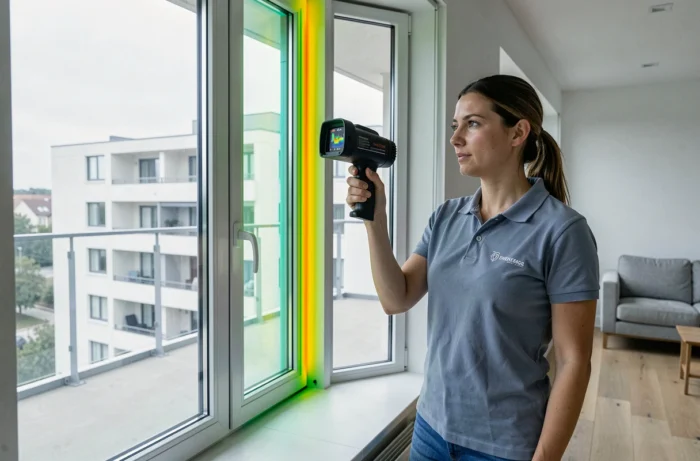
- A glazier or joiner can measure the actual thermal coefficient of the existing glazing to assess the performance loss before any decision
Refilling is not included in either of these two recommended options. It remains a marginal intervention, offered by a few providers, but without any guarantee of medium-term results. A new insulating glazing, compliant with current standards, offers guaranteed performance for decades, which no refilling can promise.
When condensation settles between the panes, the best approach remains to have the condition of the gasket and frame diagnosed by a professional. This allows for deciding between targeted glazing replacement and full window replacement, both solutions whose effectiveness is documented and durable.