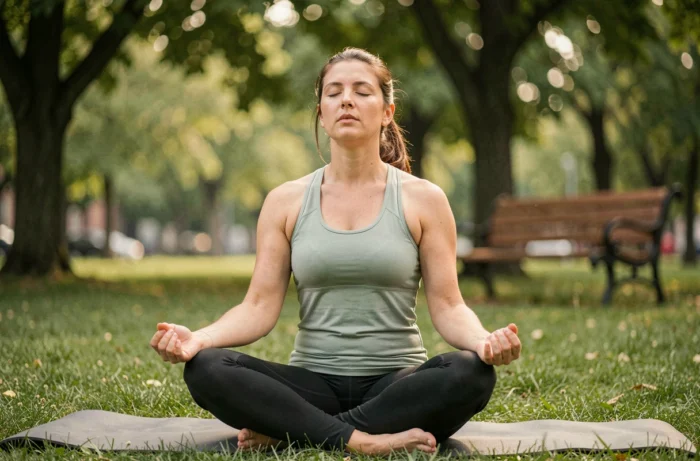
With each inhalation, air travels through the nasal passages, descends into the trachea, and reaches the pulmonary alveoli, where oxygen passes into the blood while carbon dioxide is expelled during exhalation. This gas exchange mechanism directly conditions the energy available for cells, muscles, and the brain. When breathing becomes shallow, often due to postural habits or a sedentary lifestyle, the oxygenation of the body decreases without us realizing it.
Role of the diaphragm in pulmonary oxygenation
The diaphragm is a dome-shaped muscle located beneath the lungs, above the abdominal cavity. When it contracts during inhalation, it lowers and increases the volume of the thoracic cavity, creating a depression that draws air into the lungs. During exhalation, it relaxes and rises, expelling air laden with carbon dioxide.
Most adults underutilize this muscle. In stressful situations or while in front of a screen, breathing shifts to the upper chest: shoulders rise, the abdomen remains tense, and only the upper part of the lungs fills. The volume of air mobilized decreases, along with the amount of oxygen available per respiratory cycle.
Repositioning the diaphragm at the center of respiratory mechanics is the most direct lever to improve gas exchanges. It is also a point where it is possible to breathe effectively thanks to Atom News, by understanding the fundamentals of this mechanism.
Slow diaphragmatic breathing: technique and measured effects
Slow diaphragmatic breathing involves inhaling through the nose while allowing the abdomen to expand, then exhaling slowly through the mouth or nose while gradually pulling the abdomen in. The target rhythm is around five to six breaths per minute, with cycles of about ten seconds each.

A meta-analysis of twelve randomized trials published in 2023 in Scientific Reports (Fincham et al.) showed that this practice produces modest reductions in stress, slight decreases in salivary cortisol, and an improvement in heart rate variability, a marker of the regulation of the autonomic nervous system. The effects were particularly pronounced in hypertensive adults.
In practice, the technique breaks down as follows:
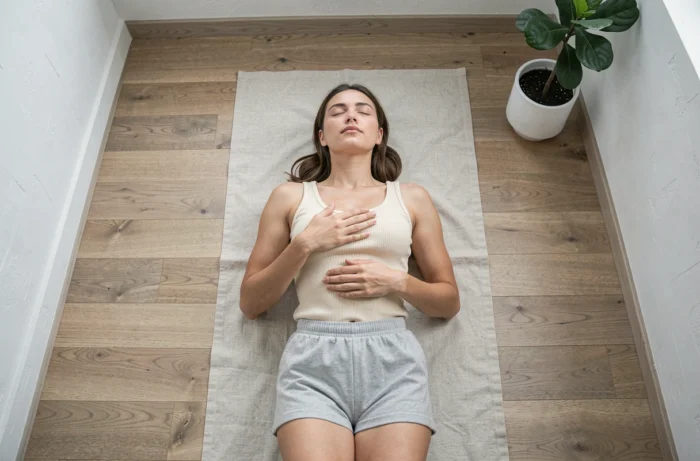
- Sit or lie down, one hand on your chest and the other on your abdomen, to check that it is indeed the abdomen that rises during inhalation
- Inhale through the nose for four to five seconds, directing the air to the bottom of the lungs
- Exhale slowly for five to six seconds, allowing the abdomen to descend without forcing
- Maintain this rhythm for five minutes, one to two times a day
A note of nuance is necessary. Recent studies (2023-2024) confirm that short sessions of about five minutes a day improve mood and lower resting respiratory rate. However, the authors emphasize that the benefits remain of low to moderate magnitude, primarily focused on stress and cardiovascular parameters, not on a profound transformation of lung capacity.
Nasal breathing and air filtration: an underestimated reflex
The nose is not just a simple entry pipe. Its internal walls, lined with mucous membranes and microscopic cilia, filter particles, warm, and humidify the air before it reaches the bronchi. Breathing through the mouth short-circuits this filtration system and exposes the lower airways to unfiltered irritants.
Nasal breathing also generates resistance to the flow of air, which naturally slows the inspiratory flow and promotes better distribution of oxygen throughout all the alveoli, including those located at the base of the lungs. Breathing through the mouth causes air to enter too quickly and concentrate in the upper areas, which are less effective for gas exchanges.
Correcting this habit requires vigilance, especially at night. If you regularly wake up with a dry mouth, it is a reliable indicator of nighttime mouth breathing. A doctor or respiratory physiotherapist can assess whether nasal obstruction (deviated septum, chronic inflammation) is contributing to the problem.
Physical exercise and respiratory capacity: what happens in the lungs during exertion
During exertion, the ventilatory flow increases to meet the oxygen demand of the muscles. The lungs do not enlarge, but the body learns to mobilize a larger volume of air per cycle and to extract oxygen more efficiently at the alveolar level.
Regular physical activity strengthens the accessory respiratory muscles (intercostals, abdominals) and improves the elasticity of the thoracic cage. Aerobic endurance pushes the body to optimize each inhalation, which translates at rest into a lower respiratory rate and a deeper breath.
Not all activities engage the respiratory system in the same way:
- Brisk walking or moderate-intensity cycling leads to a gradual increase in ventilatory flow without a sudden spike, which trains the diaphragm to work in amplitude
- Swimming imposes an additional constraint: exhalation occurs against the resistance of the water, which strengthens the expiratory musculature
- Yoga or tai chi exercises combine postures, thoracic stretches, and controlled breathing, acting on both ventilatory mechanics and the nervous system
Respiratory rehabilitation post-infection: a protocol not to be improvised
After pneumonia or a severe respiratory infection, rehabilitation recommendations emphasize gradual progression. Resuming intense breathing exercises too soon can worsen residual inflammation or cause disproportionate fatigue.
Post-infection respiratory rehabilitation protocols generally distinguish several phases, with pursed-lip exercises (exhaling through pursed lips to keep the airways open longer) and fractionated inhalations before moving on to endurance work. A respiratory physiotherapist specialized in pulmonology adapts the progression to the patient’s functional assessment.
This medical framework highlights a limit that general articles rarely mention: daily breathing techniques, however beneficial they may be for stress management and respiratory comfort, do not replace a medical assessment in cases of persistent shortness of breath or a notable decrease in exercise tolerance. The boundary between breath optimization and respiratory pathology requires a diagnosis, not just another exercise.