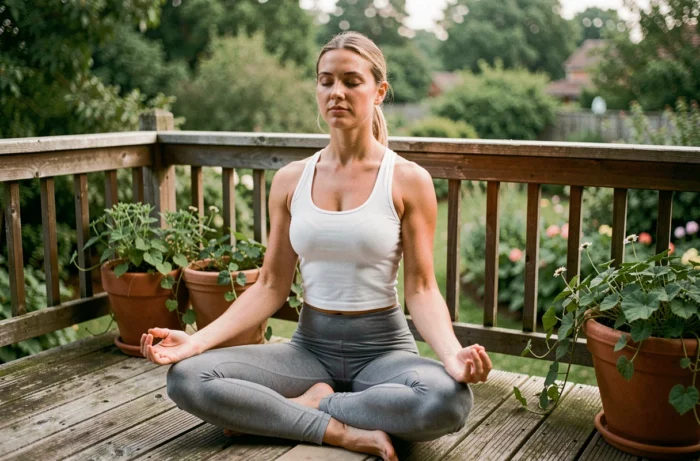
Measuring the real impact of our daily habits on mental and physical well-being involves comparing what research associates with tangible benefits and what falls under subjective feelings. In France, mental health was declared a National Priority Cause in 2025, with priorities focused on prevention, early detection, and access to care.
This institutional recognition changes the perspective: taking care of oneself daily is no longer limited to a list of good practices. Living environments and psychosocial skills now weigh as heavily as individual actions.
Sleep, physical activity, and diet: relative weight on mental health
Competitors often treat these three pillars separately, as checkboxes. Comparing their relative influence provides a more useful picture of what deserves priority effort.
| Daily lever | Documented main effect | Useful action threshold | Risk if neglected |
|---|---|---|---|
| Sleep | Emotional regulation, memory consolidation | Regularity of hours rather than raw duration | Increased perceived stress, chronic irritability |
| Physical activity | Antidepressant effect, reduction of anxiety | A few dozen minutes per day, moderate intensity | Sedentary lifestyle associated with increased risk of anxiety disorders |
| Diet | Support of gut microbiota, mood stability | Regular dietary diversity | Nutrition deficiencies worsening mental fatigue |
The table highlights an often underestimated point: the regularity of sleep hours takes precedence over total duration. Sleeping seven hours at erratic hours produces fewer benefits than a stable rhythm, even if slightly shorter.
For physical activity, the government website info.gouv.fr qualifies it as a natural antidepressant. The protective effect does not require intense sports practice. Brisk walking, utility cycling, or gardening reach the useful action threshold.
Resources like tranquillitesante.fr allow for a deeper understanding of the links between these levers and the prevention of mental disorders in daily life.

Stress management and psychosocial skills: what advice lists omit
Most popular guides suggest “managing stress” without specifying what this skill entails. Santé publique France now includes psychosocial skills in its prevention policy, alongside vaccinations and screening.
These skills encompass three distinct families:
- Emotional skills: identifying one’s emotions, understanding their origin, regulating them without suppressing them. Recognizing an emotion before it turns into an automatic reaction reduces the intensity of perceived stress.
- Cognitive skills: stepping back from one’s thoughts, distinguishing a fact from an interpretation, solving a problem step by step rather than ruminating.
- Social skills: asking for help, setting boundaries, communicating disagreement without conflict. Social isolation is a factor in the deterioration of mental health as well-documented as sedentary behavior.
Being able to name an emotion decreases its physiological grip. This mechanism, called “labeling” in the literature, requires no materials. It is enough to ask oneself the question “what am I feeling right now?” several times a day.
Practical tools accessible without a therapist
Keeping a journal of a few lines each evening constitutes an emotional recognition exercise. The goal is not literary: noting three events of the day and the associated emotion is enough to train the identification capacity.
Controlled breathing (inhaling for four seconds, exhaling for six) affects the autonomic nervous system. A few minutes are sufficient to lower heart rate and reduce perceived cortisol levels.
Living environment and well-being: the factor that the individual cannot control alone
Santé publique France now treats mental health as a determinant of overall health, on par with physical health. The approach is no longer limited to individual habits: it includes living environments, housing, working conditions, and access to care.
This reframing has a practical consequence. When stress arises from a toxic work environment or housing insecurity, individual techniques (meditation, physical exercise) act as buffers, not solutions. Recognizing the limits of individual action prevents guilt in the face of ongoing distress despite efforts.
Early detection and emergency resources
Early detection of warning signs is part of the priorities of the National Priority Cause 2025. Among these signs: deteriorating sleep for several weeks, unusual social withdrawal, persistent irritability, or recurrent dark thoughts.
In case of acute distress or suicidal thoughts, 3114 is the national suicide prevention number. Free, confidential, and available 24/7, it is staffed by trained professionals. This number also concerns relatives worried about someone in their circle.

Digital tools for mental well-being: promises and regulatory limits
Meditation, mood tracking, and online therapy apps are multiplying. Their accessibility is a real advantage, especially for those distanced from mental health professionals.
However, these tools raise specific regulatory issues. The European AI Act now regulates the use of artificial intelligence in healthcare. Health data hosts must be certified, and the confidentiality of psychological data remains a critical point.
Before using a mental well-being app, three checks deserve attention: data hosting on a certified HDS server, transparency regarding the use of personal information, and the presence of a health professional in the design loop.
The regulatory framework is evolving rapidly. A compliant tool today may no longer be so tomorrow if its host’s certification expires. This instability calls for continuous vigilance rather than blind trust in an app downloaded once.
Taking care of one’s mental and physical well-being daily relies on concrete levers whose relative weight varies according to individual situations. Regular sleep and emotional skills offer the best effort-benefit ratio for the majority of profiles. When individual actions are no longer sufficient, 3114 remains a direct line to immediate professional help.