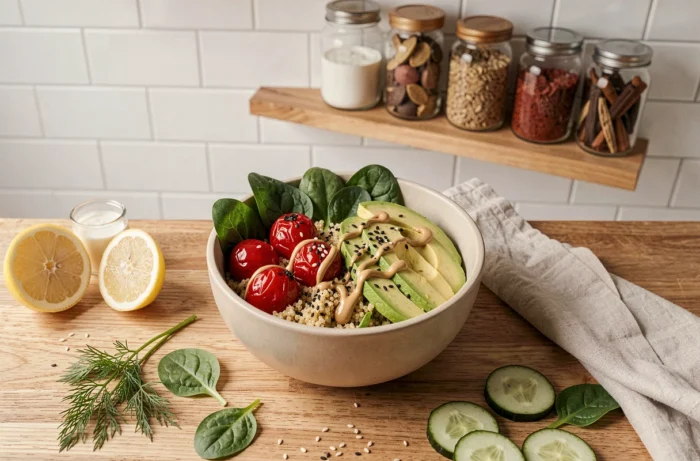
Preparing a light dinner on a Tuesday evening after a busy day, with three zucchinis, some leftover chicken, and a quarter of an hour to spare: it’s often within these constraints that the best healthy recipes are born. Light and gourmet cooking is not built from a diet, but from what you have on hand, a well-measured seasoning, and cooking methods that preserve flavor without drowning vegetables in fat.
Seasonal vegetables and short cooking: the foundation of a successful light meal
It is often believed that a light dish requires more time. It’s the opposite. A zucchini cut into ribbons, sautéed for two minutes in a pan with a drizzle of olive oil and a pinch of fleur de sel, retains its crunch and flavor. Adding halved cherry tomatoes at the end of cooking, a splash of lemon juice, and a few basil leaves: the dish is ready in ten minutes.
The principle can be summed up in one sentence: the less you cook vegetables, the more you preserve their flavors and nutrients. Leeks gently cooked in their own water, with a teaspoon of white miso added at the end of cooking, create a velvety soup base without added cream. Raw grated carrots, seasoned with toasted sesame oil and pumpkin seeds, make a filling starter in two minutes.
Ideas like these can regularly be found, adapted with everyday ingredients, on lesrecetteslegeresdechrissy.fr, where recipes systematically start from accessible products.
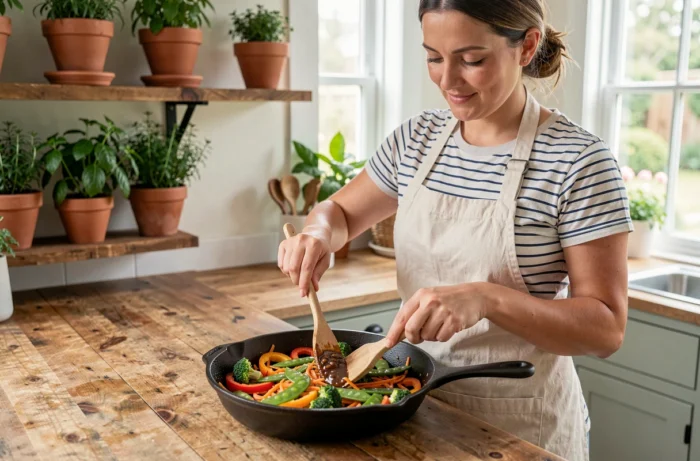
Light proteins for the evening: chicken, eggs, and plant-based alternatives
The evening meal presents a specific challenge: you want something substantial enough to avoid snacking later, but not too heavy for a good night’s sleep. Grilled chicken remains the most versatile protein in light cooking.
A chicken fillet marinated in yogurt, turmeric, and a bit of garlic, cooked in a pan without adding extra fat, served with a cucumber salad and fresh cheese: the meal is satisfying without exceeding the limits of a reasonable dinner.
Eggs offer comparable flexibility. An herb omelet (chives, parsley, tarragon) cooked over low heat with half a teaspoon of oil, served with a green salad, constitutes a complete meal in under ten minutes.
The flexitarian option that changes the routine
Nearly a third of French households identify as flexitarian according to the 2024 barometer from Protéines France and Terres Univia. This trend is reflected in evening plates. Replacing meat two or three times a week does not require a revolution: coral lentils cooked in fifteen minutes with spices (cumin, coriander, a hint of chili), served over brown rice with a drizzle of coconut milk, create a filling, flavorful, and light dish.
Legumes cook faster than you think when you choose the right varieties. Coral lentils and split peas require no prior soaking. Combined with roasted vegetables (sweet potato, bell pepper, red onion), they make a complete meal without animal protein.
Sauces and seasonings: where the flavor of a light dish really comes into play
A light dish that lacks flavor always ends up being abandoned in favor of a creamy gratin. The difference between a healthy recipe that we make again and one we forget often lies in the sauce.
The classic vinaigrette (oil, vinegar, mustard) can be lightened by replacing half of the oil with citrus juice. A mixture of lime, soy sauce, sesame oil, and grated ginger transforms any raw vegetable salad into an Asian-inspired dish. Plain yogurt, mixed with chopped mint, grated cucumber, and a drop of lemon juice, creates an express tzatziki that pairs well with both chicken and a crustless vegetable tart.
- Quick lemon sauce: juice of one lemon, one tablespoon of olive oil, one teaspoon of honey, salt, and pepper. Pairs well with grilled chicken, shrimp, or a composed salad.
- Asian vinaigrette: soy sauce, sesame oil, rice vinegar, fresh grated ginger. Works well on crunchy vegetables, rice noodles, or a vegetable stir-fry.
- Yogurt-herb sauce: plain yogurt, chives, dill, pressed garlic, salt. A great substitute for mayonnaise on a chicken wrap or as a side for a light quiche.
Varying sauces each week prevents monotony, even when repeating the same base ingredients. A tomato salad changes completely depending on whether it is seasoned with basil-olive oil or cilantro-lime.
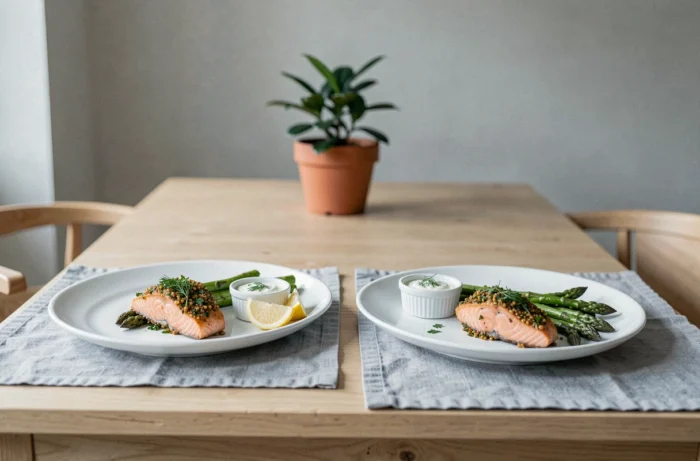
Crustless tart and express soups: two underestimated formats for light meals
The crustless vegetable tart is probably the easiest light dish to master. You mix beaten eggs with a bit of grated cheese (Comté, Emmental, or fresh goat cheese), add available vegetables (melted leeks, blanched broccoli, sun-dried tomatoes), and pour everything into an oiled dish. Thirty minutes in the oven at 180 °C, and the meal is ready for two or three people.
Removing the crust significantly reduces caloric intake without sacrificing texture. The base takes on a flan-like consistency, and the cheese provides a crispy top.
Soup as a complete meal
Soup is still too often associated with a simple side dish. A leek soup blended with a potato and seasoned with nutmeg, served with a slice of whole grain bread and a drizzle of raw olive oil, constitutes a complete dinner. In summer, a gazpacho made with fresh tomatoes, cucumber, red bell pepper, and a splash of sherry vinegar can be prepared in five minutes in a blender.
Opinions vary on adding starches to soups, but a small amount of potato or sweet potato significantly improves the texture without weighing down the result.
Cooking light on a daily basis relies neither on rare ingredients nor on complex techniques. A good knife, seasonal vegetables, a few well-chosen seasonings, and short cooking times are sufficient. The real lever is consistency: once you have three or four quick recipes down, the rest follows naturally.