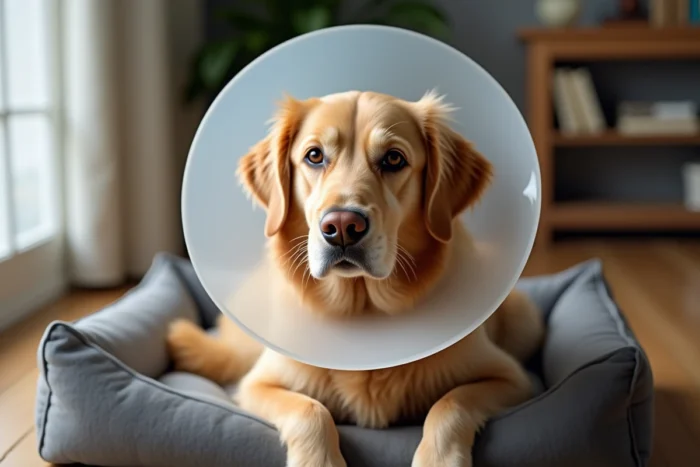
When a dog wears an Elizabethan collar after surgery or to protect a skin wound, the main challenge lies not with the animal itself, but in the space it occupies. The cone alters its perception of distances, limits its peripheral vision, and turns every movement into a negotiation with furniture. Adapting its living environment even before putting on the collar reduces stress, the risk of injury, and delays in healing.
Fall Risks and Collar: Critical Areas in the Home
Competitors detail the choice of collar or alternatives to the cone. Few address a point that recent veterinary guidelines highlight: the risk of falling down stairs is underestimated in the first few post-operative days. The cone can bump against the steps, unbalancing the dog and potentially causing a reopening of the wound or a secondary trauma.
This risk also applies to mezzanines, balconies, and any elevated platform. A dog accustomed to jumping onto a high couch or sleeping on a bed may topple if the edge of the cone catches the edge of the furniture.
Before the veterinarian’s return, it is necessary to map these areas and neutralize them. To prepare the environment for a dog with a collar, the approach is that of a room-by-room safety audit, not just a simple addition of cushions.
| Area of the Home | Main Risk with Collar | Recommended Measure |
|---|---|---|
| Stairs | Loss of balance, fall, cone hitting the steps | Safety gate or closed door |
| Balcony, elevated terrace | Toppling over a low railing | Access prohibited during the entire wearing period |
| Couch, high bed | Misjudged jump, unbalanced landing | Access ramp or temporary prohibition |
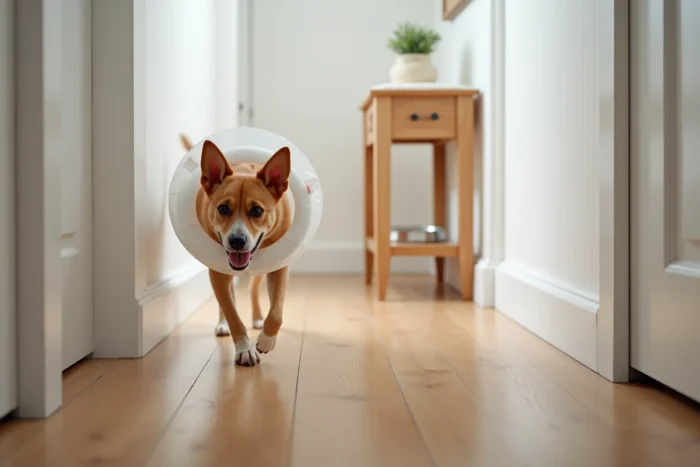
| Narrow hallways | Cone rubbing against walls, blockage, panic | Remove all floor obstacles (shoes, boxes) |
| Passage between closely spaced furniture | Cone getting stuck, possible tearing of the collar | Move furniture apart or block the passage |
Food Bowls Adapted for the Cone: Shape and Height to Recalibrate
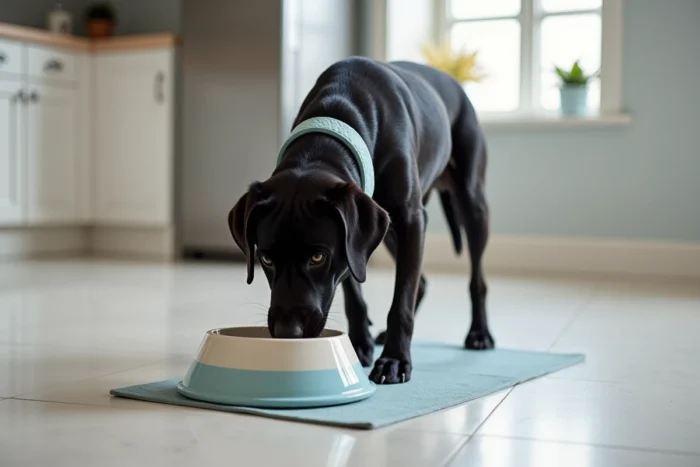
The most common advice is to raise the food bowls. This is only part of the problem. The technical specifications of classic collars (like Buster) specify that deep or double bowls on a tripod are often unusable with a cone. The edge of the cone hits the support or the edge of the neighboring bowl, preventing the dog from reaching water or food.
The configuration that works is based on three combined criteria:
- A wide, flared bowl, with a diameter larger than that of the cone, allowing the dog to dip its head without the plastic touching the edges
- A standalone bowl (no double support), placed away from a wall so that the cone does not bump against a vertical surface
- A slight elevation, sufficient so that the dog does not have to press the cone against the ground, but not so high that it forces the dog to lift its head and destabilize the cone
In practice, a shallow plate placed on a low support (a few centimeters) effectively replaces the usual bowl during the healing period.
Sleeping Area Arrangement and Management of the Rest Zone
The cone amplifies every ambient noise and creates a resonance effect around the dog’s head. The choice of bedding and its location directly affects the quality of rest, which in turn influences the speed of wound healing.
Placement of the Bed with Collar
Place the bedding in a clear corner, away from high-traffic areas. A dog wearing a collar needs more space to lie down and get up. A bed wedged between a piece of furniture and a wall forces the animal into contortions that increase irritation around the neck.
The ideal is a flat mattress placed on the floor, without rigid edges. Beds with high sides pose the same problem as deep bowls: the cone catches the edge and prevents the dog from finding a comfortable position.
Skin Protection Under the Collar
The contact area between the collar and the neck deserves daily inspection. Repeated friction can create secondary skin irritation, especially in dogs with thin skin or short hair. Placing a soft fabric (like a lightweight bandana or a compress held by a soft collar) between the cone and the skin reduces this risk.
Inflatable Collar or Rigid Cone: What Impact on Arrangement
The type of collar changes how the space needs to be organized. The inflatable collar, often touted as more comfortable, offers a better field of vision and does not bump into furniture. However, it is less effective at protecting wounds located on the legs or lower body, as the dog can maneuver around the cushion to reach the area.
The classic rigid cone remains the reference for post-surgical protection, but it requires a more open environment. The inflatable collar requires less spatial arrangement but demands increased supervision to ensure the animal does not access the wound.
| Criterion | Classic Rigid Cone | Inflatable Collar |
|---|---|---|
| Protection of the Surgical Area | Wide coverage, including legs | Limited to areas near the head |
| Dog’s Field of Vision | Reduced (tunnel vision) | Almost normal |
| Impact on Movement | Bumps into furniture, walls, frames | Minimal snagging |
| Required Arrangement | Wide clearance, barriers | Minimal |
| Risk of Removal by the Animal | Low if well-fitted | Higher (possible chewing) |
The choice between the two depends on the location of the wound and the veterinarian’s recommendations. The arrangement of the home is then adapted to the chosen type.
Duration of Wear and Gradual Adjustments to the Environment
The duration of wear varies depending on the nature of the procedure and the speed of healing. During the first few days, the environment should be as restricted and secure as possible. Limiting access to one or two rooms allows for controlling risks without constantly monitoring the entire home.
As healing progresses, the perimeter can be gradually expanded. Reintroducing access to the garden or secondary rooms should be done in stages, checking each time that the dog does not get stuck or bump into obstacles with the cone.
A common mistake is to remove the collar too early because the dog seems uncomfortable. Discomfort is normal and decreases with habituation. What should raise concern is a dog that refuses to drink, eat, or lie down despite an adapted environment: in this case, a return to the veterinarian is necessary to check the fit of the collar size to the dog’s neck.