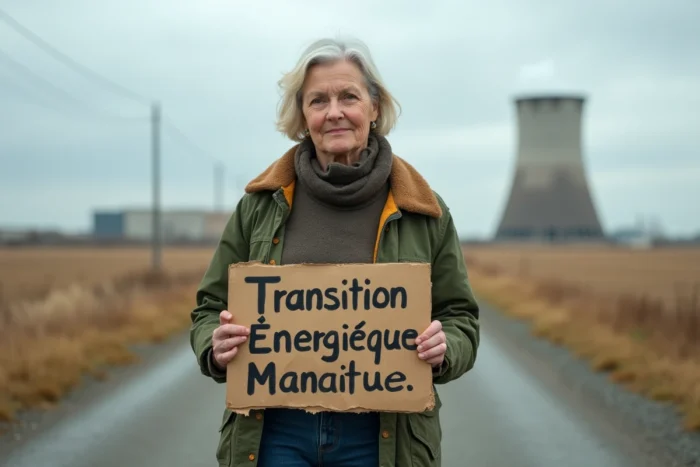
To say no to nuclear power is to raise a question about the type of energy system a country chooses to finance for the next fifty years. The debate is not limited to the opposition between CO2 emissions and radioactive risk. It involves trade-offs regarding construction costs, waste management, water consumption, and the actual capacity of the fleet to operate during extreme climate events.
This article compares the available data to measure what nuclear power brings and what it costs to the French energy transition.
Cost of new nuclear and renewable energies: comparative table
The EPR2 program announced by the French state plans for six new reactors. The Élysée confirmed in March 2026 a financing scheme where the state covers about 60% of the cost through a subsidized loan to EDF, amounting to nearly 43.7 billion euros. This amount reflects a public commitment without recent equivalent in the French energy sector.
The EPR at Flamanville took more than fifteen years from the start of construction to actual production. Organizations like the one documented on sdn-rennes.org remind us that these delays directly impact the final bill and delay decarbonization.
| Criterion | Nuclear (EPR2) | Onshore Wind | Photovoltaic Solar |
|---|---|---|---|
| Commissioning Delay | 10 to 15 years (observed on the EPR Flamanville) | 3 to 5 years | 1 to 3 years |
| Share of Public Funding | About 60% (state loan) | Partial subsidies | Partial subsidies |
| CO2 Emissions (lifecycle) | Very low | Very low | Very low |
| Waste to Manage | High-level radioactive waste | Blades, metals (partially recyclable) | Panels (partially recyclable) |
| Water Dependency | High (cooling) | None | None |
This table highlights a temporal gap. One euro invested in solar or wind generates decarbonized kilowatt-hours long before an EPR2 reactor is connected to the grid.
Climate Vulnerability of the French Nuclear Fleet
The efficiency of a nuclear power plant caps at about 30% thermal conversion to electricity. The rest is dissipated as heat, primarily through cooling water. This operation poses an increasing problem in the context of global warming.
During heatwave episodes, several reactors had to be temporarily shut down or operate in degraded mode. The river water, too warm, no longer allowed compliance with regulatory thermal discharge thresholds. Some sites obtained exemptions to continue producing, at the cost of further warming already stressed waterways.
Heatwaves reduce nuclear production at a time when electricity demand increases (air conditioning, ventilation). This seasonal vulnerability undermines the promise of controllable energy under all circumstances. In contrast, photovoltaic solar reaches its production peaks precisely during these same periods of maximum sunlight.
Nuclear Waste and Imported Uranium: Two Structural Dependencies
France does not have an active uranium mine on its territory. All of the fuel is imported, primarily from Kazakhstan, Canada, and Australia. This situation creates a dependency on imports comparable to that of oil, which the nuclear program of the 1970s aimed to reduce.
On the waste side, the problem remains without a complete industrial solution. High-level long-lived waste requires confinement over geological time scales. The Cigéo deep storage project in Meuse concentrates criticism on long-term feasibility and associated costs.
- High-level waste represents a small volume but contains almost all of the radioactivity of the French fleet, with a danger duration of several hundred thousand years.
- Reprocessing at La Hague allows for recycling part of the spent fuel but generates secondary waste and documented sea discharges for decades.
- No country in the world has yet commissioned a permanent geological storage site for high-level waste (Finland is the most advanced with the Onkalo site).
Centralized Production and Geopolitical Risks of Nuclear Power
The French nuclear fleet relies on a model of ultra-centralized production around about fifty reactors. This concentration creates systemic fragility. When stress corrosion issues affected several reactors simultaneously, the availability of the fleet dropped sharply, forcing France to massively import electricity.
The war in Ukraine also highlighted a long-theoretical risk: the threat of military attack on nuclear facilities. The Zaporizhzhia plant has been militarily occupied. This situation reminded us that no containment structure is designed to withstand repeated targeted strikes.

Conversely, a network based on thousands of renewable installations spread across the territory offers superior structural resilience. The destruction or failure of a wind or solar farm affects only a marginal fraction of national production.
- A decentralized model reduces line losses related to electricity transport over long distances.
- It allows local communities to participate in energy governance and reap economic benefits.
- The geographical diversification of sources naturally smooths out production variations related to weather.
The choice between nuclear and renewables is not just a matter of grams of CO2 per kilowatt-hour. Construction delays, dependence on water and imported uranium, millennia-long waste management, and the vulnerability of a centralized fleet weigh heavily in the equation. Data shows that each year of delay for a reactor is a year when renewable capacities could have produced. The energy transition also hinges on the timeline.