When putting together an outfit for the season, the first instinct is often to draw from color trends or key pieces spotted on the runway. This approach works, but it overlooks a parameter that is increasingly influencing the collections offered in stores: the European regulation on environmental claims, which comes into effect from September 27, 2026.
Specifically, brands can no longer display “responsible collection” or “eco-designed” without verifiable evidence. This framework directly modifies the pieces highlighted this season, their displayed composition, and the way they are chosen.
Textile traceability and digital passport: what changes in the fall-winter collections
Before discussing cuts or colors, it is essential to understand why certain pieces appear (or disappear) from the selections this season. The digital passport for products, expected to be mandatory for textiles in 2027 under the ESPR regulation, is already prompting brands to revise their product sheets.
Labels are now showing information about repairability, the exact composition of materials, and the traceability of the production chain. For us, consumers, this means that a “trendy” piece is no longer just about its cut: the material sheet becomes a full-fledged selection criterion.
Browsing the fashion selection of Style Papers, we notice that the highlighted pieces already incorporate this logic of transparency. Brands that anticipate these obligations gain clarity, and their fall-winter collections become more coherent.
Restrictions on generic environmental claims (prohibition of non-certified in-house labels, vague promises of carbon neutrality) also eliminate part of the greenwashing. The result: the pieces that remain on the shelves deserve more attention.

Trendy pieces for fall 2026: focusing on real sustainability rather than fashion effects
Once this context is established, we can talk style. The season’s trends revolve around a few strong axes, but the regulatory filter encourages prioritizing pieces with documented longevity.
Materials and colors to favor this season
Classic autumn shades (burgundy, chocolate, khaki) dominate the collections. These colors work because they transcend seasons without going out of style in three months.
In terms of materials, dense wool fabrics and traceable cotton are gaining ground against synthetic blends whose composition remains vague. This is not by chance: with the rise of extended producer responsibility (EPR) schemes for textiles in Europe, brands are anticipating the end-of-life management of their garments. A piece made from a single material is easier to recycle than a polyester-viscose-elastane blend.
Straight jeans and blazers: two safe bets as long as you check the composition
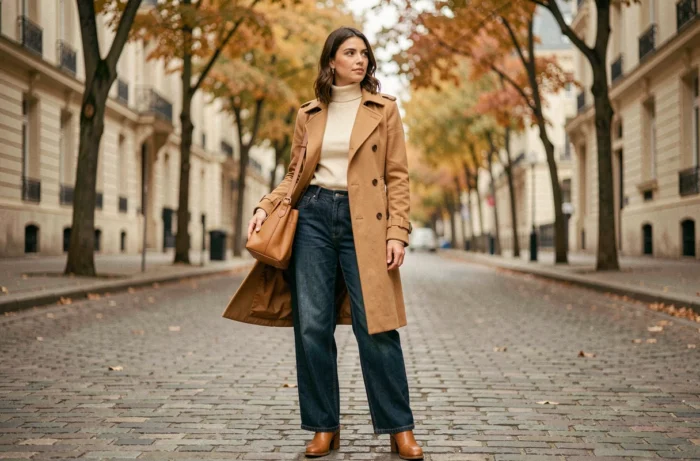
Straight jeans remain ubiquitous this season. They can be found in all selections, and for good reason: they are a piece that adapts to most body types and styles.
The point of caution is the proportion of elastane. A pair of jeans containing a low percentage of synthetic fibers will be easier to recycle in the separate collection streams being established at the European level. Opting for jeans with over 95% cotton is not just an ecological argument: it is also a guarantee of durability over time.
The blazer follows the same logic. Versions made from blended wool or structured linen offer better aging than polyester-lined blazers. For a trendy style that lasts beyond the season, it is wise to check the label before making a purchase.
Building a seasonal outfit with fewer, better-chosen pieces
The classic temptation is to accumulate: a flowy pant here, a knitted sweater there, a printed blouse for variety. The problem is that this approach generates a wardrobe where half of the pieces do not combine with each other.
An effective fashion selection relies on a core of complementary pieces. Here are the concrete criteria for making choices:
- Color compatibility: choose three base colors (a dark neutral, a light neutral, a seasonal shade) and stick to them so that each piece works with the others
- Versatility of use: a piece worn only in the evening or only at the office takes up space for limited use, while a flowy wool pant can transition from the office to the weekend
- Clarity of composition: if the label lists five different materials without specifying percentages, feedback on this point varies but durability is rarely guaranteed
- Cost per wear: a piece worn fifty times costs less than a trendy piece worn three times, even if the purchase price is higher
This reasoning is nothing new, but it takes on an additional dimension when brands are required to clearly display what they are selling. We finally have the information to make informed choices.
Practical guide: reading fashion labels for the 2026 season
With the new regulatory obligations, labels become a concrete selection tool. Here are some guidelines to help you navigate:
- A main material percentage above 90% indicates a single-material piece, easier to maintain and recycle
- The mention of the country of manufacture (not just “imported”) indicates an effort towards traceability
- The absence of self-proclaimed labels (like “eco-friendly” without third-party certification) is now a positive signal: it means the brand complies with the prohibition on generic claims
A garment without vague labels is often better than a garment covered in unverifiable promises. This is the paradox of this season: less “green” communication, more real transparency.
The trendy style of this fall-winter is not only reflected on a rack or in a lookbook. It is also reflected on a label, in a material sheet, in a piece’s ability to last beyond the season for which it was designed. The best fashion selections of 2026 are those that take both dimensions into account without sacrificing one for the other.