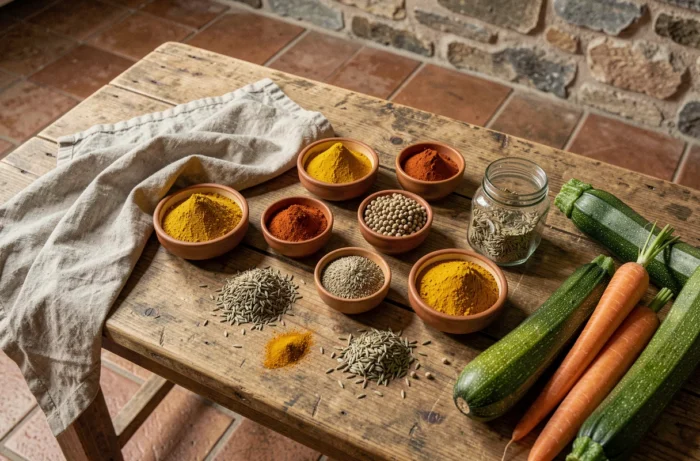
Not all spices behave the same way when exposed to the heat of an oven or prolonged contact with a béchamel. Some release their aromatic compounds early in the cooking process, while others lose their appeal if added too soon. Comparing common spices based on their heat resistance and affinity with vegetables allows for more precise choices than the simple habit of “salt, pepper, nutmeg”.
Heat Resistance and Aromatic Profile: Comparative Table of Spices for Vegetables
The behavior of a spice depends on the nature of its aromatic molecules. Lipophilic compounds (like curcumin from turmeric or capsaicin from chili) withstand oven temperatures better than a highly volatile oil like that from coriander leaves. This criterion radically changes the way to season a gratin or roasted vegetables.
| Spice | Oven Stability (200 °C, 30 min+) | Best Time to Add | Vegetable Affinity |
|---|---|---|---|
| Ground cumin | Good | Before cooking | Carrots, squash, chickpeas |
| Smoked paprika | Good | Before cooking | Potatoes, bell peppers, eggplants |
| Turmeric | Very good | Before cooking (with fat) | Cauliflower, zucchini, root vegetables |
| Nutmeg | Medium | At the end of cooking or in béchamel | Spinach, potatoes, endives |
| Ground coriander | Medium | Before cooking or mid-cooking | Fennel, carrots, sweet potatoes |
| Fresh ginger | Low (loses pungency) | At the end of cooking or raw as a finishing touch | Broccoli, green beans, zucchini |
| Cinnamon | Good | Before cooking | Butternut squash, sweet potatoes, carrots |
This table highlights a point that lists of “must-have spices in your kitchen” often overlook: the timing of when to add the spice is as important as the choice of spice. Fresh ginger, for example, loses its zest after long cooking in the oven. Adding it grated to already roasted vegetables yields a more pronounced result.
To explore less common associations between spices and vegetables, the selection of spices on Mon Blog Cuisine offers combinations categorized by type of dish.
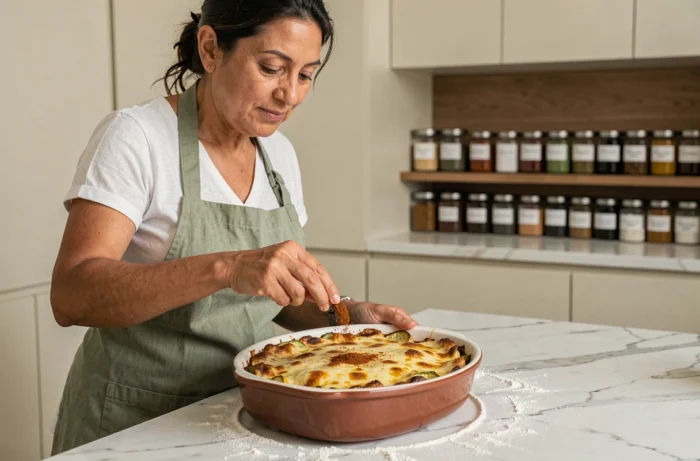
Gratins and Béchamel: Why Nutmeg is Not Enough
Grated nutmeg in béchamel is a reflex ingrained in French cooking. It adds a woody roundness that pairs well with cheese and cream. The problem is that it masks as much as it enhances: its aromatic power overshadows the vegetables in the gratin.
In contrast, turmeric combined with a pinch of black pepper creates a more subtle aromatic base, slightly earthy, that allows the flavor of cauliflower or broccoli to shine through. The pepper activates the bioavailability of curcumin, intensifying the color and flavor without needing to increase the amount.
Root Vegetable Gratin: The Cumin-Coriander Duo
For a gratin of carrots, parsnips, and turnips, the combination of cumin and ground coriander works on a warm and slightly citrusy register. These two spices complement each other: cumin adds depth, while coriander adds freshness. They can be incorporated directly into the béchamel or into the cream layer before baking.
Using equal parts cumin and coriander yields a balanced result. Increasing the proportion of cumin pushes the gratin towards a more Eastern profile, while more coriander brings it closer to a Nordic, herbaceous style.
Revisited Dauphinois Gratin: Smoked Paprika and Garlic
Smoked paprika (pimentón de la Vera) adds a smoky aroma that transforms a classic dauphinois gratin. Sprinkled on the last layer of potatoes before baking, it forms a colorful and fragrant crust. Garlic, crushed and mixed with cream, amplifies this grilled dimension.
This combination works because the compounds in smoked paprika are stable at high temperatures. They do not evaporate during the long cooking times of a gratin, unlike fresh herbs that brown and lose their fragrance.
Smoky Aromas and European Regulation: What Changes for Spice Blends
Since July 1, 2026, the European Commission has banned the marketing of non-meat food products containing certain smoke flavors. Eight specific smoke flavors are no longer allowed in spice blends intended for vegetables, chips, or plant-based prepared dishes.
This measure pushes manufacturers to reformulate their products. The shift is towards naturally smoked spices like smoked paprika, smoked pepper, or smoked garlic. For the home cook, this doesn’t change much: using real smoked paprika instead of an industrial blend containing a synthetic flavor will yield a better taste result anyway.
This regulatory context makes it relevant to check the composition of commercial spice blends. A product labeled “smoky flavor” without smoked paprika or chipotle pepper in its ingredient list likely relied on these now-banned flavors.
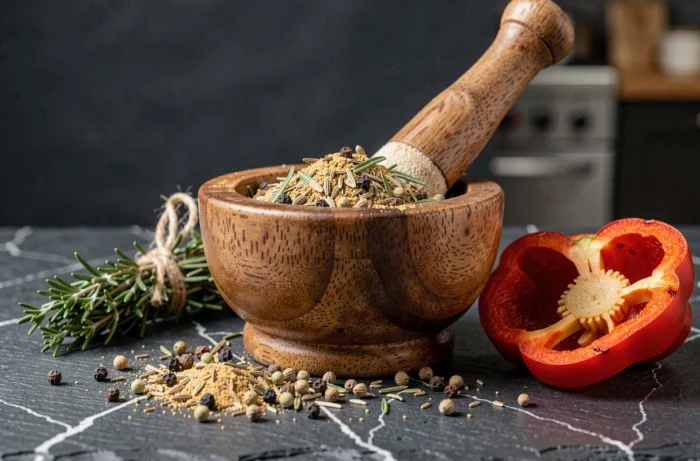
Oven-Roasted Vegetables: Three Combinations That Change the Result
Rather than an exhaustive list, here are three tested combinations for specific families of vegetables, with the relative dosage between spices.
- Squash and Sweet Potatoes: cinnamon, cumin, and a pinch of cayenne pepper. The cinnamon enhances the natural sweetness of these vegetables, cumin adds complexity, and the pepper adds heat without overpowering. Add before cooking with a drizzle of olive oil.
- Mediterranean Vegetables (zucchini, bell peppers, eggplants): smoked paprika, ground coriander, and dried thyme. This trio evokes southern cuisine without resorting to a pre-made blend. Thyme holds up well in the oven and ties the flavors together.
- Green Vegetables (broccoli, green beans, asparagus): grated fresh ginger, black pepper, and a splash of lemon juice after removing from the oven. These vegetables cook quickly, and adding fresh ginger at the end of cooking preserves its spiciness and freshness.
In all three cases, coating the vegetables in oil before adding the spices allows the lipophilic aromatic compounds to adhere to the surface. Without fat, some of the flavors remain in powder form and burn upon contact with the baking sheet.
The choice of a spice for a vegetable relies less on tradition than on the chemistry of cooking. A gratin that spends forty minutes in the oven requires stable spices. Vegetables sautéed for three minutes can handle delicate aromas. Starting from this thermal constraint simplifies decisions and yields more consistent results than randomly adding a generic blend.